
November 03, 2026

6 min read
How Velocitor is shaping the future of fleet technology
When the North Carolina-based software company identified a gap in its platform, Wells Fargo financed an acquisition designed to fuel its next chapter of growth.


Key takeaways:
- Velocitor Solutions grew from an early bet on mobile workforce technology into a fleet management platform serving customers around the world.
- The company’s acquisition of NextBillion.ai expanded its routing, mapping, and artificial intelligence capabilities.
- Wells Fargo provided financing and industry expertise to help Velocitor complete its first major acquisition and support its next stage of growth.
In early 2000, Shawn Flemming had his fill of cold, dark northern winters. A senior sales representative working outside Philadelphia, he started looking for opportunities somewhere warmer and landed a job at a technology company in Charlotte, North Carolina.
On his first day, the company’s CEO told him about a standout salesman who did things his own way. Intrigued, Flemming walked into the salesman’s office to see what he could learn.
“A few minutes into the conversation, he asked where I went to high school,” Flemming said. “Then he told me to say ‘hello’ to my brother. Somehow, he’d been to my house, knew my family, and we’d never met.”
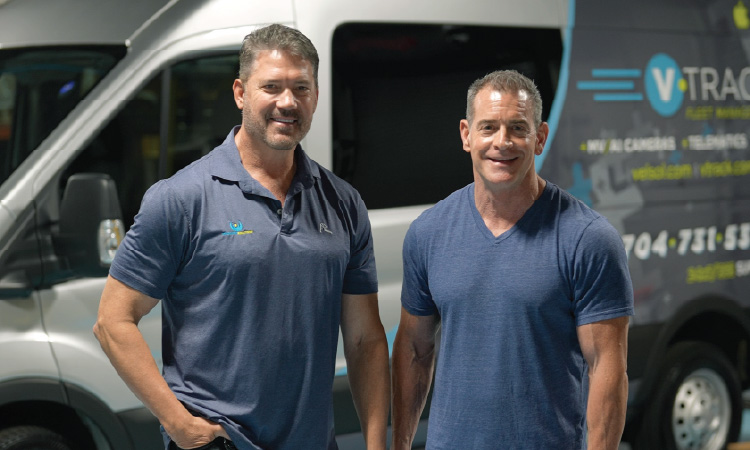
The salesman was Rich Pacella. Neither man understood it at the time, but that conversation changed their lives. A few months later, they both moved on from the technology company and co-founded what would become Velocitor Solutions.
-
![A piece of tracking software hangs from the ceiling.]()
Real-time data and connected technology help Velocitor’s customers gain greater visibility into fleet operations, logistics, and field service activities.
-
![Two people each hold one small dog in their hands.]()
Velocitor employees are allowed — and encouraged — to bring their dogs with them to the office. It’s all a part of the company’s aspirations to make the work environment inviting and warm.
-
![A person with a headset looks at two computer screens on a desk.]()
Velocitor combines mobile technology, fleet management tools, and real-time data to help businesses manage field operations more efficiently.
-
![Two people look at two computer monitors that are sitting on top of a desk.]()
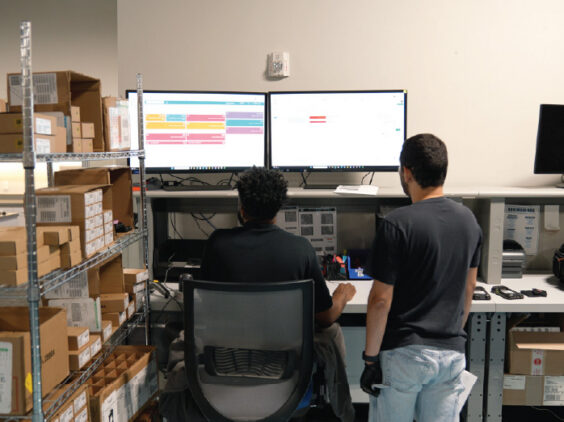
In 2025, Velocitor acquired NextBillion.ai, a Sinagpore-based software company specializing in routing, mapping, and artificial intelligence tools. It helped the company add advance route planning and route optimization capabilities customers were requesting.
-
![A piece of tracking software hangs from the ceiling]()
Velocitor’s technology and software are helping reshape fleet management. Its AI-powered cameras provide real-time driver coaching to automated compliance and inspections tools, and around-the-clock call center support.
-
![A person sits in one cube, with two monitors, inside a large office space.]()
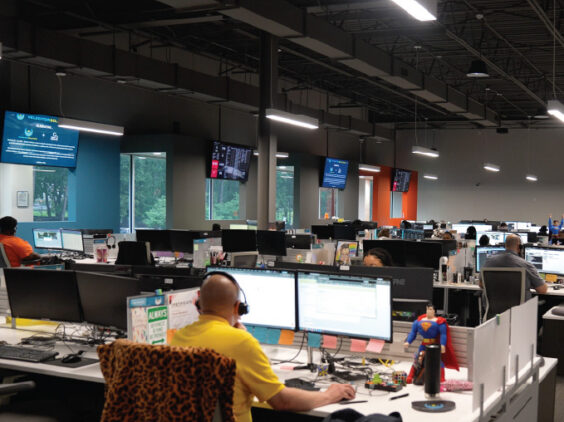
Charlotte, North Carolina, has been Velocitor Solution’s home since its founding in 2000.




A partnership that started with a conversation
The two friends built Velocitor to help businesses with employees in the field work more efficiently through mobile technology. Over time, it expanded into fleet management, transportation, field service, and other industries where efficiency and visibility are critical.
“This was almost a decade before the first smartphones showed up,” Flemming said. “So, we were pretty early when it comes to mobile. But that’s credit to Rich. He was convinced the future was mobile. I was interested in going after anything technical, but he said, ‘No, we’ve got to go mobile.'”
Today, Velocitor is still headquartered in Charlotte, led by the same two founders who took a chance on a startup. What began as a small software company has grown into a business serving customers around the world.
That early bet on mobile technology eventually became the foundation for a broader platform serving companies that manage drivers, vehicles, routes, and field operations.
“Working with the team at Wells Fargo through our financing process was an outstanding experience. Their approach was genuinely collaborative, far surpassing the typical transactional interactions we've encountered elsewhere. ”
The company also uses AI-equipped cameras that coach drivers in real time. Its platform automates the compliance and inspection work that can keep many fleet managers behind schedule, and its call center runs all day, every day.
By monitoring idle time alone, Velocitor says it can cut a client’s annual fuel costs by as much as 80%. And when an accident isn’t a driver’s fault, the in-cab video can exonerate them on the spot, saving payouts that can run into six figures or more.
“The biggest challenge that we solve for fleets is driver safety and efficiency,” said Pacella. “Most fleet managers are very, very busy and they’re responsible for all their drivers, all their vehicles, keeping up with compliance things, keeping the fleet inspected. Our software platform automates that entire process while we provide coaching for the drivers.”
For most of those 26 years, Flemming and Pacella built the company with no outside investors and no outside debt.
Identifying the next growth opportunity
As it grew, customers kept asking for advanced route planning, route optimization, and AI-driven intelligence — capabilities the company didn’t have at the level large enterprise customers needed. Too often, according to Flemming, it had to refer that work to competitors.
“We got tired of hearing that,” Flemming said. “We recognized there was a missing piece in our platform, and we said, ‘You know what? We can do this on our own.'”
The answer was NextBillion.ai, a Singapore-based software company with routing, mapping, and artificial intelligence tools — and a footprint that stretched across Singapore, India, and China, with clients in Europe as well.
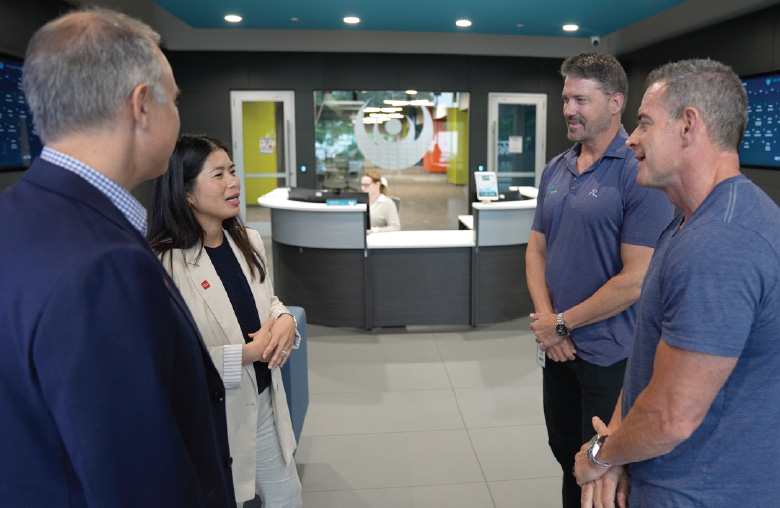
Wells Fargo’s Max Frank (left) and Dzung Nguyen with Velocitor co-founders Shawn Flemming and Rich Pacella. Wells Fargo provided financing to support Velocitor's acquisition of NextBillion.ai, a milestone that expanded the company's technology platform and global reach.
Financing a first major acquisition
For Velocitor, acquiring NextBillion filled the gap in its platform, added a global presence, and let the company offer customers a single integrated solution. But it was Velocitor’s first major acquisition, it was international, and it required financing beyond the scale of what Flemming and Pacella had done before.
What began as a local Commercial Banking conversation with Wells Fargo quickly pulled in Wells Fargo’s specialized industries group.
Max Frank, a Technology Commercial Banking relationship manager, saw Velocitor’s appeal immediately.
“In the early part of our conversation with the company, it was clear that they didn’t need just a generic financing package,” Frank said. “They needed a strategic banking partner that understood the mission-critical nature of their software.”
Because Velocitor is a software-as-a-service business (SaaS), its business depends on recurring revenue rather than the EBITDA metrics that traditional banks use.
“Wells Fargo understood what that meant,” Pacella said. “Other banks were more traditional and really worried about EBITDA. Wells Fargo understood our space, our industry, and it was the best fit.”
Wells Fargo ultimately provided a hybrid facility that included a cash flow-based loan as well as a commercial real estate loan to fund the acquisition. This required drawing on expertise across technology banking, credit and risk, commercial real estate, treasury management, and the local relationship banking team in Charlotte. The acquisition was announced on September 30, 2025.
“This deal came together and was a successful close because we worked together as one team across Wells Fargo,” said Dzung Nguyen, a Technology Commercial Banking East Region executive. “Their needs span multiple areas of the bank, and by bringing together the right expertise and industry insights, we were able to move at a speed that was appropriate for the company.”
The process was smooth enough that Rich says he was only pulled in on specific questions. It was a sign for him that things were going well.
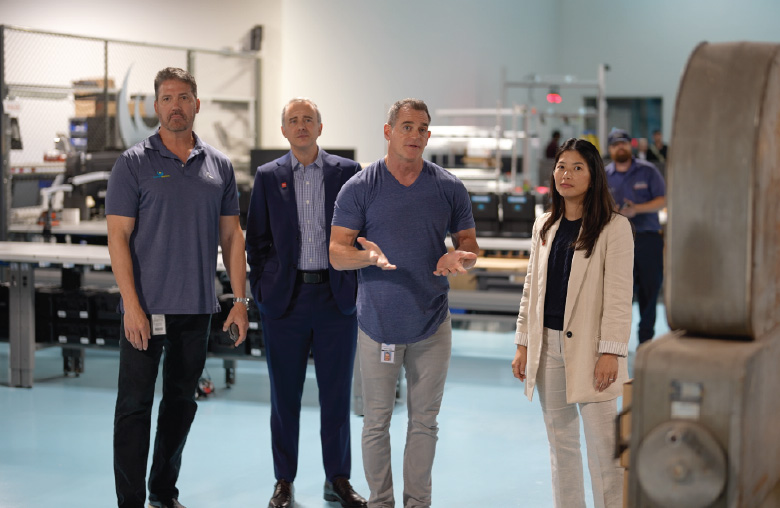
Shawn Flemming (left) and Rich Pacella (center), co-founders of Velocitor Solutions, chat with Wells Fargo’s Dzung Nguyen (right) and Max Frank on the warehouse floor of their headquarters in Charlotte, North Carolina.
“Working with the team at Wells Fargo through our financing process was an outstanding experience,” said Tom Riley, Velocitor’s chief financial officer. “Their approach was genuinely collaborative, far surpassing the typical transactional interactions we’ve encountered elsewhere. It was truly refreshing to partner with a bank that takes the time to understand our unique business and its specific needs, rather than applying a one-size-fits-all model.”
Culture as a competitive advantage
While the acquisition represented an important growth milestone, the founders say Velocitor’s long-term success has always depended on its culture.
“I really feel that to be successful you need to constantly be conscious of that culture and learn where to modify it along the way,” said Pacella. “Early on, it was really important for me to have a culture that was so inviting that our employees wake up every morning wanting to come to work instead of feeling like they have to.”
Decades after an unexpected office conversation sparked a friendship and business partnership, Flemming and Pacella are still focused on what’s next.
“This company has been our baby for more than 25 years,” Flemming said. “We’ve poured ourselves into building it, and we’re still incredibly excited about where it’s going.”