August 18, 2026

6 min read
How we’re helping build Alaska’s skilled trades workforce
In Alaska, skilled trades power the economy, but businesses need more trained workers to keep growing. Wells Fargo is supporting local trades schools to strengthen the career pathways driving vital industries in the region.
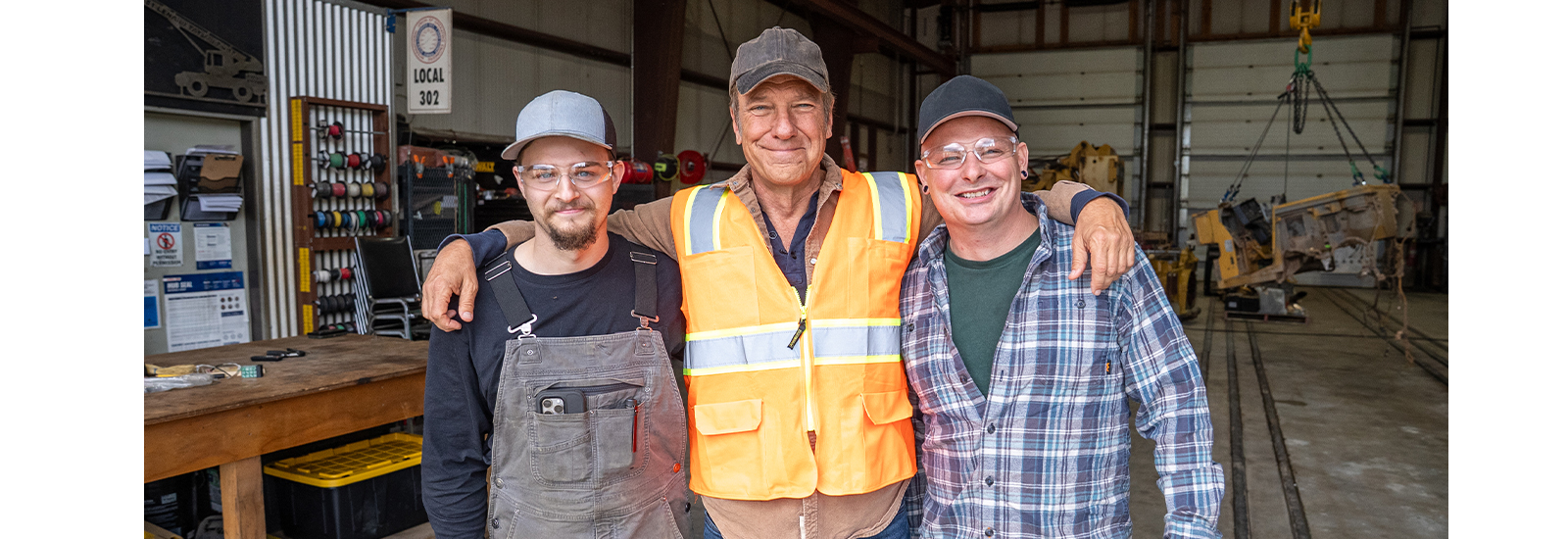
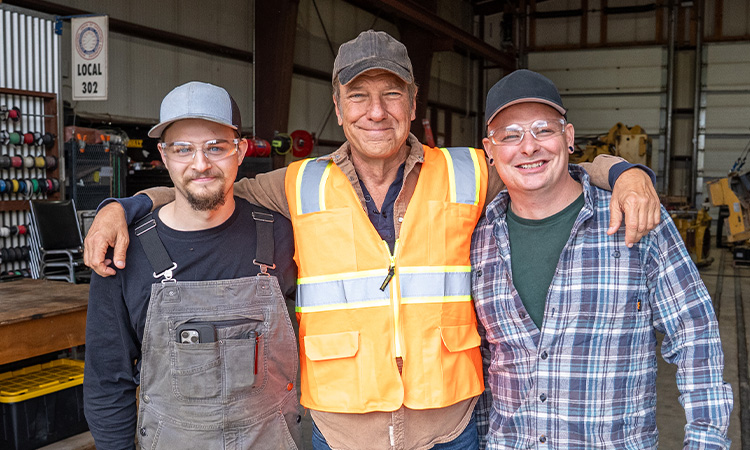
Mike Rowe, a longtime champion of the skilled trades, worked alongside Wells Fargo to spotlight craftspeople across Alaska like the boatbuilders at Bay Weld Boats in Homer, Alaska.
Within days of graduating, Allyson Chryss had what many students hope for: a good-paying, career-oriented job. In her field, this quick start is increasingly common.
As a fabricator for Bay Weld Boats in Homer, Alaska, Chryss is part of a skilled trades workforce in high demand. One reason is a shrinking talent pool: For every five people aging out of the skilled trades, only two are entering the field, the U.S. Department of Education estimates.
“I had an opportunity to work anywhere in the world, and I didn’t even make it out of Alaska,” she said. “What we do here really is art. … It’s just like a giant puzzle, and I get to go home every day knowing that I’m building this incredible thing.”
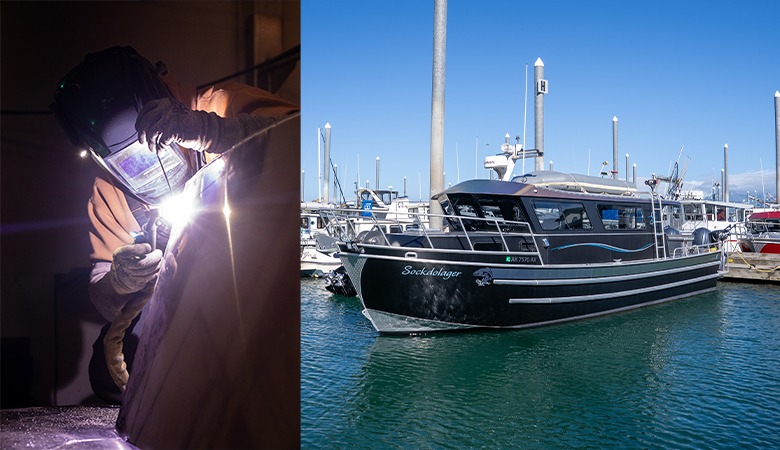
Bay Weld Boats creates fully custom boats meant for whale watching, commercial fishing, and other Alaskan industries.
For Bay Weld Boats, this talent gap directly limits business growth. That has a ripple effect. For Homer, a town of about 6,000 known as the world’s halibut fishing capital, that can mean fewer boats serving the commercial fishing, tourism, and marine industries that help drive the local economy.
To help address this need, Wells Fargo is supporting the Alaska Vocational Technical Center (AVTEC) with a $250,000 donation to help grow its skilled trades programs and offer scholarships to the next generation of Alaska’s tradespeople. The support is part of Wells Fargo’s broader effort to help local businesses and communities build the workforce they need to grow.
The state school has been an essential source of fresh talent for Bay Weld Boats, where 20% of the workforce is made up of AVTEC graduates, including Chryss.
“It’s 100% vital to the business to have this kind of skill set available to not only sustain but grow the workforce,” said Eric Engebretsen, the company’s second-generation owner. “It’s the only way the business exists; it survives.”
[Video overview: Through the voices of business owners, trainees, and industry leaders, this video explores the growing demand for skilled trades workers in Alaska. It showcases the role workforce training plays in helping people build rewarding careers and helping local businesses thrive.]
[Music]
[Mike Rowe, CEO, mikeroweWORKS Foundation]
Every small business owner I ever talked to they all told me the same thing: Finding people who would show up early and stay late and master a useful skill. That was the single biggest challenge I heard every day for 20 years. And every time somebody told me about that challenge, I would say, ‘You ever been to Alaska? They get it. They know.’
[Eric Engebretsen, Owner and CEO, Bay Weld Boats]
Our primary limitation at Bay Weld is workforce, the skilled people to do what we need to do. The only way we can produce custom aluminum boats, we have to have the highest skilled tradespeople anywhere.
[Cory Ortiz, Division Director, Alaska Vocational Technical Center (AVTEC)]
AVTECH is a post-secondary vocational training center. We really focus primarily on hands-on training. More students are recognizing that there’s a significant return on investment for doing skilled trades.
[Alison Hawkins, Head of External Relations, Wells Fargo]
We chatted a little bit about what his needs were and felt like investing in Alaska would be money well spent.
So, we are, happy to announce a $250,000 donation to AVTECH.
[Applause]
[Sam Mazzeo, Commercial Banking Leader, Wells Fargo]
Skilled labor, from electricians to welders to plumbers to carpenters. We need about 1,500 people in those trades every year right now.
[Mike Dunleavy, Governor of Alaska]
The best years for Alaska are the next 50 years. And you guys have been the ones that built Alaska. You will be the ones that build Alaska. And I just appreciate everything you do to build this great state.
[Allyson Chryss, Welder, Bay Weld]
My dad is a naval engineer, so I wanted to work with boats and learned that welding was really fun.
[Amy Schumacher, Director, Fairbanks Pipeline Training Center]
The whole reason FPTC was built was to bring the trades together, to train together, because you go to the slope and you work together, so you might as well train together first. We have a pipeline training and everybody gets together. We build a mock pipeline, everybody knows a little bit about everybody else’s job so that you can orientate yourself when you’re on the slope.
[Rowe]
What are the risks? Okay. Where’s the danger?
[Danny Ruerup, Assistant Director, Alaska Laborers Training School]
So, the danger is literally getting out of bed every day. You’re working in climates that are anywhere from zero to 75 below, 80 below.
[Unidentified speaker]
We’re loading up this truck here.
[Unidentified speaker]
You’re under control, right?
[Rowe]
I can’t believe they tossed me the keys to the crane. It’s unbelievable.
[Music]
[Dan Sullivan, U.S. Senator, Alaska]
I never tire of bringing federal officials up here to see it.
[Vern Miller, COO, ASRC Energy Services-Houston Contracting Company, Inc.]
So, I think that these are important ways in which we can increase our skilled labor force. Without places like this, to train people to do this work, America falls apart.
So America’s biggest resource is the people that’s in it.
[Mary Knell, Vice Chair, Wells Fargo Commercial Banking]
That is why today I’m very proud, on behalf of Wells Fargo, to announce a $250,000 philanthropic investment.
[Whistling and applause]
[Schumacher]
We plan to update some of our equipment. We have a couple welders here, in fact, that we need to modernize. And, we will expand the introductory classes that some of our students take here at the Fairbanks Pipeline Training Center.
[Rowe]
All we can do with what we know in the moment that we’re in is tell the best stories we can, and the stories that we need to tell are right in front of us. They’re the graduates of your program.
[Ruerup]
I was going to explain to my wife, ‘I just quit my job.’ Found the laborers hall, signed up, and a week later I was on the job making three times more money than I’d ever made in my entire life.
[Rowe]
It’s the American dream.
In Alaska, skilled trades power the economy, but local businesses like Bay Weld Boats need more trained workers to keep growing. Wells Fargo is supporting local trades schools like the Alaska Vocational Technical Center (AVTEC) and Fairbanks Pipeline Training Center (FPTC) to strengthen the career pathways driving vital industries in the region. (03:48)
Why Alaska businesses need more skilled trades workers
If you look out at the frigid waters of Kachemak Bay, you’ll see plenty of Bay Weld Boats’ custom aluminum vessels: fishing boats, research vessels, whale-watching tour boats, and everything in between.
Many of those vessels would not be possible without AVTEC’s skilled trades programs in Seward, a few hours’ drive away. At the state’s top-ranked vocational school, these programs fill up in minutes.
Supporting Alaska’s pipeline training
Alaskan businesses serve a critical role in the country’s oil and gas industries. That work requires a constant supply of skilled workers, from welders and pipefitters to surveyors and electricians.
That’s why Wells Fargo also donated $250,000 to the Fairbanks Pipeline Training Center (FPTC) to help its workforce training programs. The center is the country’s only multicraft training trust, which means students learning various skilled trades work alongside each other. That replicates a real pipeline work site.
“If you want anything built, you’re going to have to have the trades come in and build them,” said Amy Schumacher, director of the FPTC. “Any of the workforce development we can invest in today is going to help us tomorrow.”
Alaskan companies like Arctic Slope Regional Corporation (ASRC) and its subsidiaries rely on the FPTC and other training centers for tradespeople.
“To keep this industry growing, we absolutely have to have a workforce. And to keep that workforce and train them, we have to have people reach out, find these people who want to get trained, and have a good place to get trained,” said Vernon Miller, a general superintendent for Houston Contracting, an ASRC subsidiary and the state’s largest union pipeline company. “America’s biggest resource is the people who are in it.”
It’s not hard to understand why: 93% of AVTEC graduates find jobs. The school does not have enough capacity to meet demand, and Wells Fargo’s donation will also help support faculty.
“Alaska’s economy runs on the skilled trades, and we see that reflected in our enrollment numbers right now. We have more students interested in training than we have training slots. It’s both a wonderful place to be and a difficult place because we desperately want to keep Alaskans in Alaskan jobs,” said Cory Ortiz, the school’s division director.
For many Alaskans, AVTEC is the first formal introduction to industrial welding, plumbing, heating, and other trades. Those skills are critical for Bay Weld Boats because its vessels can include everything from kitchens and living spaces to high-tech computer systems. And because the business builds each custom boat from start to finish, Engebretsen said they need all this talent in-house.
“Most of the jobs surrounding boat building come from experience and time in the industry,” said Brad Conley, general manager and COO of Bay Weld Boats. “To be able to give people a direct avenue to step into formal training that can line them up with a career with us is really important.”
The business specializes in manufacturing durable boats that can withstand the extreme conditions of Alaska’s Arctic and Pacific waters. This region is crucial for many sectors of the economy. For example, Alaska is responsible for 60% of the country’s commercial seafood, most of which winds up in American restaurants or homes, according to the McKinley Research Group. Bay Weld Boats also serves the region’s popular sportfishing and ecotourism sectors.
“A manufacturing business like this is creating a product that creates a service industry around it. … These boats go to work,” said Sam Mazzeo, Wells Fargo’s Commercial Banking leader in Alaska. “They are a mainsail for this community’s economy.”
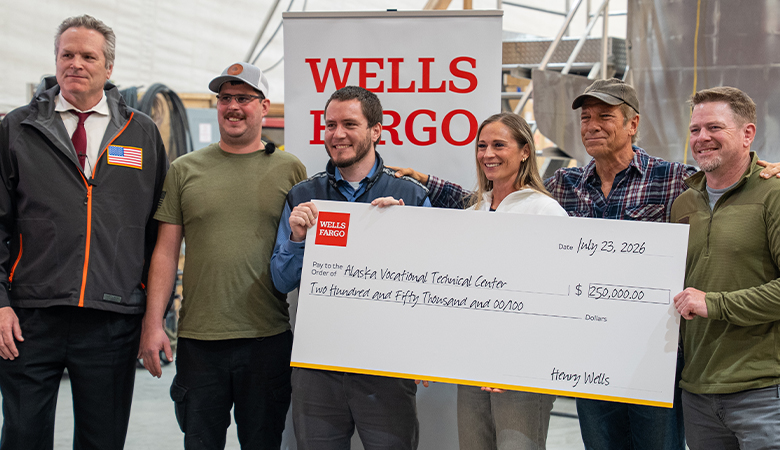
Wells Fargo donated a combined $500,000 to two Alaskan skilled trades programs, including the Alaska Vocational Technical Center, the only post-secondary career and technical training center owned and operated by the State of Alaska.
How Wells Fargo is investing in Alaska’s future
Wells Fargo has been banking and investing in communities across Alaska for more than a century, since 1916. That support continues in many forms today as the state grows.
“There’s a tremendous amount of excitement here in the Alaska business environment,” said Mary Knell, Wells Fargo’s vice chair of Commercial Banking. “It’s a region that is investing in a lot of very important growth activities, such as infrastructure in energy, critical minerals, and developing additional resources.”
Wells Fargo works with businesses and tribal organizations across Alaska to help them access capital for growth. Engebretsen has banked with Wells Fargo since childhood and is now working with Chris Vaughan, a Wells Fargo commercial loan officer and relationship manager based in Anchorage, Alaska, and the Commercial Banking team as Bay Weld Boats becomes a client.
Engebretsen hopes Wells Fargo’s support will help bolster the talent pool that companies like his depend on. The potential impact of a larger workforce is huge.
“If I had double the workforce today, I could double the business tomorrow,” he said. “There’s that much opportunity.”