July 31, 2026

7 min read
How being unbanked or underbanked could cost you $360,000 over a lifetime
In Gallup, New Mexico, a financial coach is helping residents of the Navajo Nation stabilize their finances, build wealth, and avoid high-cost banking alternatives.
[Video overview: Eli Tully, Operation HOPE Inside Coach; Mary Ehrsam, EVP, President of Operation HOPE Partnerships; Saul Van Beurden, CEO of Consumer, Smal & Business Banking; and Laura Montoya, New Mexico State Treasurer talk about the launch of a HOPE Inside Center in New Mexico.]
[Music]
[Eli Tully, Operation HOPE Inside Coach]
It’s a monumental moment for me because I’m in my own community, and I’m helping my community build financial stability.
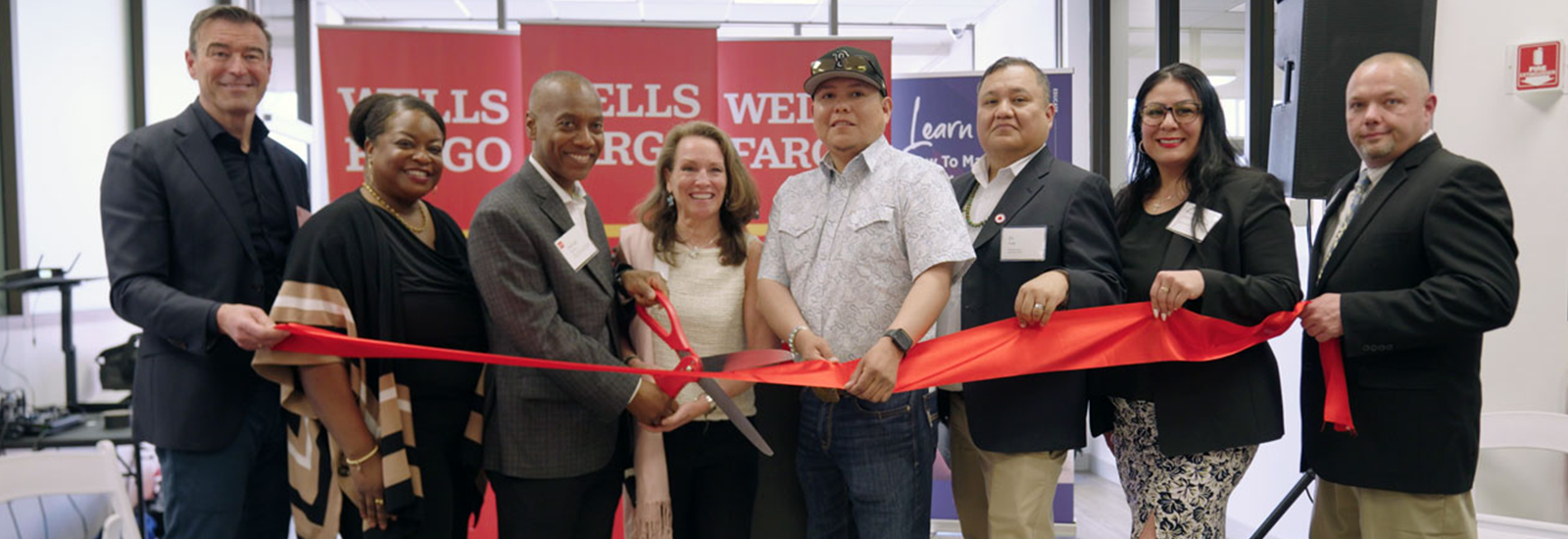
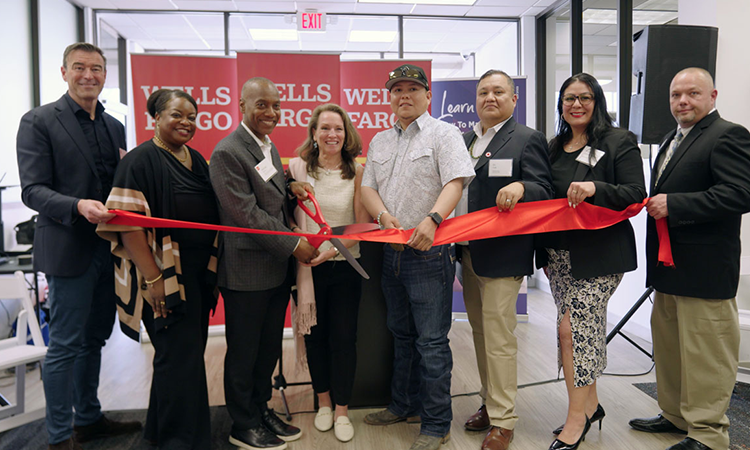
[A group of people cheer while cutting a large red ribbon to symbolize the grand opening.]
[Mary Ehrsam, EVP, President of Operation HOPE Partnerships]
Operation HOPE’s first office and first launch of a partnership in New Mexico is incredible.
[Saul Van Beurden, CEO of Consumer, Small & Business Banking]
If you have access to the bank and you need help or you start to get in financial distress, we are there to help you and we are there with the HOPE Centers to help you.
[Laura Montoya, New Mexico State Treasurer]
I am very grateful for all of you for participating in this.
[Tully]
I feel like it’s very important because financial stability, financial literacy is the backbone of success.
[On-screen text]
©2024 Wells Fargo Bank, N.A. All rights reserved.
Representatives from Wells Fargo and Operation HOPE were on-hand in Gallup, New Mexico, to celebrate the opening of the first HOPE Inside center in the state. (0:40)
Credit: Hector Batista

Key takeaways
- Serving the Navajo Nation: An Operation HOPE financial coach is serving residents of New Mexico, Arizona, and the Navajo Nation in their native languages. Many are unbanked or underbanked.
- Free financial coaching: This free, one-on-one financial coaching is possible through a HOPE Inside center within a Wells Fargo branch in Gallup, New Mexico. Clients do not have to bank with Wells Fargo to receive help.
- Increasing access to banking: Millions of unbanked and underbanked households use nonbank financial services, according to the FDIC (PDF). These may come with high fees or interest rates that make it harder for people to accomplish their financial goals.
- Reported results: Clients of HOPE Inside centers have reported gains in growing savings, reduced debt, and higher credit scores, according to Operation HOPE data.
Winding single-lane highways connect the corners of the Navajo Nation. Near the country’s largest reservation — bigger than West Virginia — Maria Reyes connects communities, too. Each journey through the Southwestern desert to meet a client is a financial bridge where there may not have been one before.
Unbanked: There are approximately 5.6 million U.S. households in which no one has a checking or savings account at a bank or credit union.
Underbanked: About 19 million households in the U.S. are underbanked, which means although their household is banked, they use:
- Nonbank transactions like check cashing services, or
- Credit services like payday lending, pawn shops, or auto title loans
Reyes, an Operation HOPE financial coach, primarily serves clients from the first HOPE Inside center in New Mexico. The center, which is in a Wells Fargo branch in the reservation border town of Gallup, New Mexico, is among a growing number of HOPE Inside centers in Wells Fargo branches around the country that provide free, one-on-one financial coaching. Operation HOPE data shows this coaching has empowered people to save money, reduce debt, and increase their credit scores.
This coaching is helping residents of the Navajo Nation address unique hurdles to managing money and accessing financial services. Native Americans report the lowest rates of bank account and mainstream credit access, according to FDIC data.
When Reyes speaks with clients, she draws on her own experiences. Reyes speaks Navajo, grew up on the reservation, and her mom didn’t have a bank account until late in life.
“It’s really common that Native American adults and young adults aren’t familiar with basic financial concepts like credit, budgeting, and [financial resources]. And that lack of knowledge is not simply an individual issue. It’s connected to broader historical and systematic barriers,” she said.
What does it cost to be unbanked?
$40,000
The potential cost of being unbanked due to using high-fee alternative banking products like check-cashing services
$360,000
What that $40,000 could generate if it was invested over 40 years via a low-cost, exchange-traded fund
$378,300
The median home price in New Mexico
How the cost of being unbanked adds up over time
According to 2023 research from the FDIC, 1 in 8 Native Americans nationally, or approximately 12%, are unbanked. Without a full banking relationship, unbanked and underbanked Americans may turn to alternative financial services that can carry risks, including higher interest rates, larger fees, or the potential loss of valuable assets like a car.
In Gallup, for example, many clients with debt from payday loan companies or pawn shops, which are concentrated along the reservation border. Nationally, Native American households report the highest rates of using these services, according to the FDIC.
Relying on services from payday lenders, check cashers, pawn shops, or money transfer services can feel like getting stuck on a treadmill. It’s hard to move forward when you’re paying high fees or interest rates. The Brookings Institution found that an unbanked person could spend as much as $40,000 on check-cashing services over their lifetime. That may be only the beginning for households stuck in cycles of debt.
“People wind up paying those fees over and over and over again,” said Nadia van de Walle, head of the Banking Inclusion Initiative at Wells Fargo. “Relying on these alternative banking options never allows the unbanked person to get ahead and participate in the banking economy.”
For some, high-cost nonbank financial services may function more like daily money managers than long-term wealth builders. Van de Walle said it gets worse when unbanked households don’t have a mainstream banking relationship and miss out on three keys to creating multigenerational wealth:
- Credit access through credit cards and loans
- Earned interest and returns via savings and investment products
- Knowledge of how the financial system works
So, why are people unbanked? The most-cited reasons are the costs of banking, unpredictable or unexpected fees, and issues reaching minimum banking requirements, according to the most recent 2023 FDIC survey data (PDF).
On the Navajo Nation, access to high-quality banking services — along with necessities like groceries, electricity, and water — is a major barrier. When Reyes helped a client find a real estate appraiser to assess their home, there were only two options within 500 miles.
“It’s like connecting the entire family to resources. The resources out here are really limited,” she said.
How HOPE Inside clients are improving their finances:
- 60% increased their credit score by an average of 35 points.
- 78% increased their savings by an average of $589.
- 40% decreased their debt by an average of $1,761.
Source: Operation HOPE data as of June 2026
How HOPE Inside centers help unbanked and underbanked clients
Coaching offered through HOPE Inside centers focuses on financial goals such as improving credit scores, boosting savings, and building budgets. The coaching is free, and clients have no obligation to bank with Wells Fargo. By working with coaches like Reyes, clients build a path toward reaching their financial goals.
“The most important thing is what happens next. Once you can achieve financial stability, can you buy a home? Can you start a business? Can you achieve a better auto loan? Can you put your kids through college?” said Mary Ehrsam, Operation HOPE’s president of partnerships. “That’s what we’re here for.”
Wells Fargo serves one in three of the country’s 574 federally recognized tribes, and its work with the Navajo Nation goes back more than six decades. In fact, there are five branches throughout the reservation.
“Our roots are in the West. And what that means is our leaders have experience working in Indian Country. They’ve met tribal leaders, and they’ve been to reservations,” said Dawson Her Many Horses, managing director and customer growth segment leader at Wells Fargo.
Wells Fargo continues to invest in HOPE Inside centers to help more communities as part of the Banking Inclusion Initiative. Since inception, the program has helped more than 26,000 people improve their finances. Wells Fargo aims to have 50 HOPE Inside centers throughout the U.S. by the end of 2026.
“At the end of the day, we’re empowering people to be able to take control of their financial future,” van de Walle said. “And that’s multigenerational, because they can teach their children and their families, too.”