January 20, 2026

10 min read
From basement beginnings to billion-dollar success
For MS International (MSI), family values and adaptability have fueled decades of growth — supported by a longtime banking relationship with Wells Fargo.
Credit: Courtesy of the Shah Family

Key takeaways
- Co-CEOs Rajesh and Rupesh Shah left careers in finance after seeing the company’s potential in the early 2000s.
- MSI evolved from a natural stone distributor to a purveyor of a wide range of surfaces by following consumer trends.
- Trust and harmony are what the family credits as keys for avoiding conflict and allowing rapid execution of their goals.
- For more than 20 years, MSI has built a deep and growing relationship with Wells Fargo, providing a broad range of financial solutions to support their evolving needs.

Rika Shah and sons Rajesh and Rupesh visit the Washington Monument.
Credit: Courtesy of the Shah Family
In a modest home outside Fort Wayne, Indiana, Rajesh and Rupesh Shah grew up like a lot of kids in the 1980s.
Their parents went to work every day, took them to shopping malls, and sometimes even the local arcade. They constantly preached the value of education, encouraged their sons to treat people with kindness and dignity, told them to forever take care of each other, and always emphasized adaptability as an attractive trait.
It was impossible to recognize at the time, but what their parents, Manu and Rika Shah, were instilling in them were the values that would shape their personal and business future.
In 1975, from the basement of that home, the family started MS International. Across the decades since, it’s grown from a regional stone company to a leading supplier of flooring, countertops, and hardscaping products in North America.
Not in the plans
A common story has been told hundreds of times in real life, on television screens, and in theatres. Parents start a business, their kids grow up around it, they’re told at an early age they’ll one day be in charge, so they begin preparations for that day.
Except, that’s not how it went for the Shahs.
“Taking over for my parents was never in the plans,” said Rupesh Shah, now Co-Chief Executive Officer of MSI alongside his brother Rajesh. “It was just always a small business to us, something my mom did in the basement. We honestly never thought it would get to where it is.”
Today, MSI has more than $2.5 billion in annual revenue, more than 3,000 U.S. employees, and is responsible for helping create more than 400,000 jobs around the world across its supplier base.
“My parents never pushed us to come back to the business,” Rupesh said. “They would always tell us to go where your heart pushes you.”
For college, the brothers’ hearts pushed them to the University of Pennsylvania where they studied economics and finance. Upon graduation in 1996 and 1999, they both secured roles at global financial services firms.
And that’s how things were going to stay, until they saw how well their parents were running MSI, the increasing popularity of the industry, and the growth potential of the business.
“After four years of working finance for me, and seven for my brother, we saw so much opportunity at MSI,” Rupesh said. “We asked our dad for a job and quit the ones we had on the same day in 2003. It’s as simple as that. For me, after working in finance I wanted to get involved with a company that makes products and creates things.” The transitioning of a family business from one generation to the next sometimes takes a circuitous route.
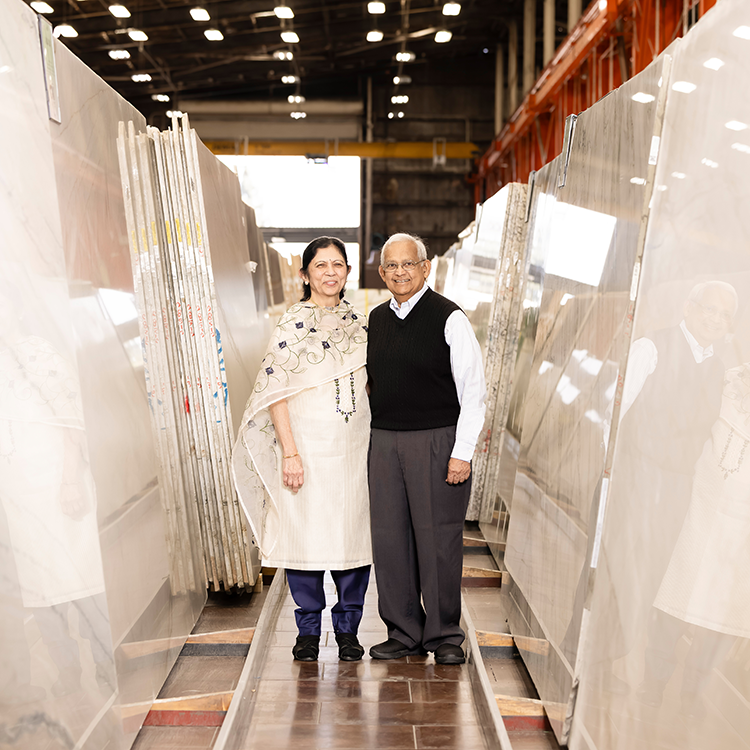
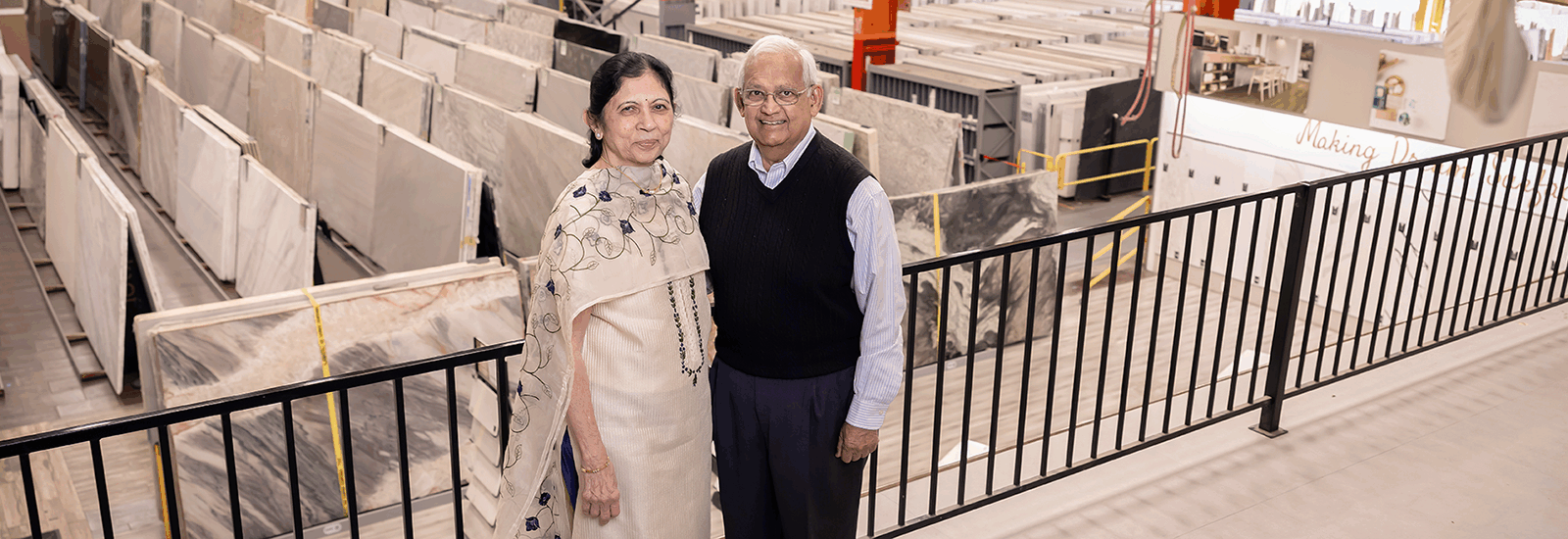
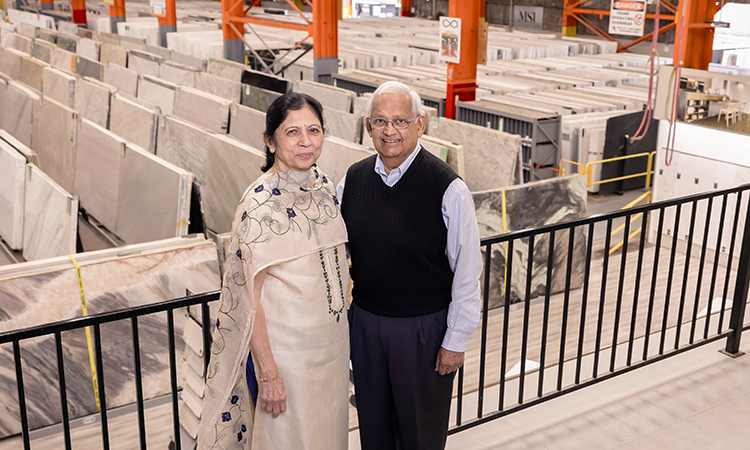
Rika Shah (left) founded MS International with her husband, Manu Shah, in 1975 in Fort Wayne, Indiana.
Credit: Courtesy of the Shah Family
Don’t mess it up
Manu Shah arrived in the United States from India in the late 1960s. All he entered the country with were the clothes on his back, $210 in cash, and $2,000 he secured with a loan.
His goal in his new country? Become an engineer and use technology to secure a job in the competitive American job market.
“He wanted a better education, so he found a way to get here and then graduated from Purdue University,” Rupesh said. “He came to the U.S. with a ton of optimism, not worrying about what can go wrong.”
When MSI was in its infancy, Manu Shah worked full-time as an engineer at a now-defunct manufacturing company during the day, before returning home to sell natural stone — mostly granite — to U.S. manufacturers mostly in the monuments industry.
In 1981, the Shahs landed their first big contract, while still operating out of the Fort Wayne basement. They secured the right to supply the black granite for the Vietnam Veterans Memorial in Washington, D.C.
“When they first started the business, it was with a high-tech mindset,” said Andrew Moy, managing director and head of Commercial Banking Client Growth Segments for Wells Fargo. “They were exporting microprocessors and chips to India from the US. Rika was looking for a business to fully commit to, one where the family could bring a high-tech mindset to a still-evolving industry. That’s why they chose flooring, countertops, and hardscaping products.”
The Vietnam Veterans Memorial helped propel the business forward, eventually pushing the Shahs to leave Indiana for the ports and access of Southern California. By the time Rajesh and Rupesh joined as adults, the company was a well-oiled machine.
“It wasn’t hard to jump in or manage the transition to joining MSI,” Rupesh said. “We were very lucky that we joined at the same time and had each other to lean on. More than that though, all we really had to do was not get in anyone’s way and not mess it up. There were so many different areas the business could grow that we focused on those new opportunities and let what was working, work.”
“We have pledged to be adaptable no matter what happens. We may think we know what’s going to happen next, but the reality is we just don’t. We try to study people and follow our customers where they’re heading.”
Long-term relationships
In addition to the adaptability Manu and Rika stressed to their sons and infused into their company, there are three tenets that are like sacred texts to MSI and its employees:
- Purpose: Make dreams attainable.
- Vision: Achieve growth at double the industry rate, while expanding the size of the market.
- Mission: Achieve sustained growth.
“When me and my brother joined, we were only selling natural stone,” Rupesh said. “We wanted to grow, and since then we’ve added porcelain, luxury vinyl flooring, quartz, granite, marble, artificial turf, and on and on. We’ve kept expanding channels, product lines, and gone from three locations to 52 locations.”
And that kind of sustained growth, over the course of more than 20 years, can’t happen without a trusted financial partner. For MSI and the Shahs, it’s been Wells Fargo most of that time.
MSI’s strong partnership with Wells Fargo spans multiple products and services, from treasury management and checking accounts to collections, disbursements, and credit card processing.
“We’re loyal people and we believe in Wells Fargo,” said Rupesh. “The support it’s provided us has been vital as we’ve sought to fulfill our mission of growing at double the industry rate.”
“Their business savvy is only half of their effectiveness,” explained Relationship Manager Kim Striegl. “MSI has hundreds of ships bringing materials into the United States from all over the world. The family manages the entire process, and they are just as efficient as a logistics company as they are in their primary business. They are experts in scale and operations, and they’re always looking for new and innovative ways to solve industry-wide challenges.”
Added Manishi Parikh, Wells Fargo group senior credit officer, Commercial Banking: “We’ve been MSI’s main bank for a long time and are its largest provider of debt capital. Rajesh and Rupesh really expanded our long-term relationship, and we were with them through several economic downturns.”
Loyalty, much like adaptability, has defined MSI. You might imagine that parents and children working together will naturally present challenges — even more so with brothers as the company’s senior-most executives.
Except, that’s not how it goes for the Shahs.
“It’s kind of like a marriage,” Rupesh said. “If we both don’t agree, we don’t do it. If we do, we double down, and one person takes responsibility. My parents were extremely comfortable with us running the company. They would let us run when we needed to run and provide support where they could. That gives us a huge advantage because we can move with a lot of speed.”
-
![The Shah family]()
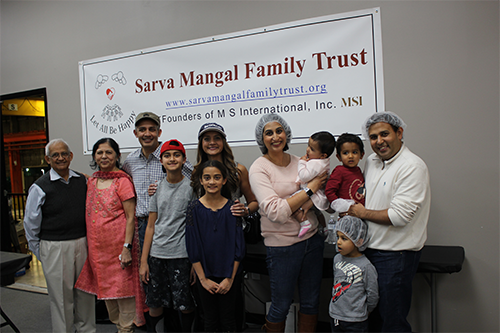
Today, Rajesh (far right) and Rupesh Shah (2nd from left) are Co-Chief Executive Officers of MSI, and the company has more than $2.5 billion in annual revenue.
Credit: Courtesy of the Shah Family
-
![The Shah family]()
Manu Shah once told his sons, Rajesh and Rupesh, he wants the last check he writes to bounce because he’s given everything away to great causes. Philanthropy has been a key aspect of MSI as the Shahs grew it from a regional business to a global one.
Credit: Courtesy of the Shah Family
-
![The Shah family and MSI team]()
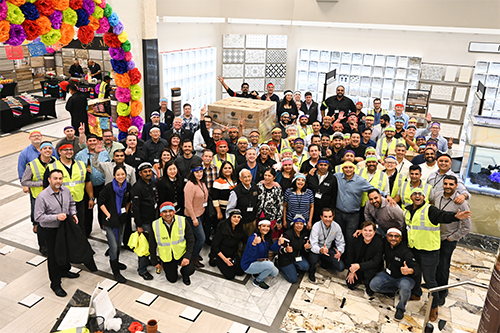
MSI has more than 3,000 employees in the United States, and is responsible helping create more than 400,000 jobs around the world across its supplier base.
Credit: Courtesy of the Shah Family
-
![The Shah family stands outside in front of a large piece of construction equipment to break ground together.]()
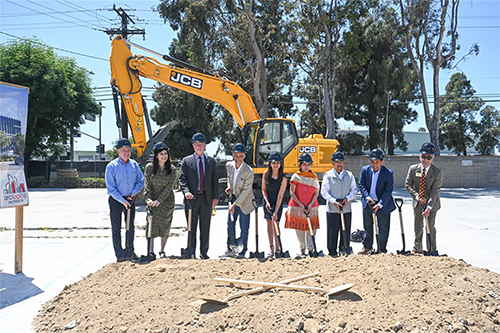
Headquartered in Orange, California, MSI maintains more than 50 state-of-the-art showrooms and distribution centers across the U.S. and Canada, and sites in seven other countries, including Brazil, China, India, and Mexico.
Credit: Courtesy of the Shah Family
-
![The MSI team sits in a lecture hall seminar]()
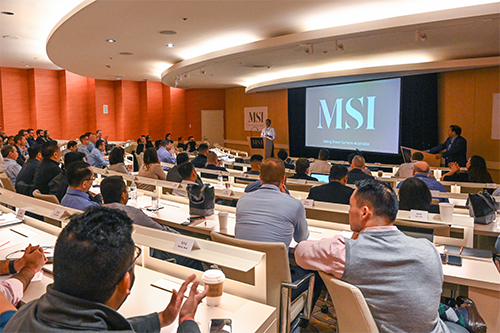
Twenty years ago, 100% of MSI’s business was natural stone. Though the industry has grown, natural stone is not even 15% of its business today. Rupesh Shah attributes the company’s growth to following customers and meeting them where they are.
Credit: Courtesy of the Shah Family

2025 Asian Hall of Fame Inductees
Billion-dollar businesses don’t happen without skillful execution and poise through challenging times. They also usually require a little help along the way. MSI and the Shahs are no different.
It’s why they’ve always operated with a mindset of gratitude and giving back.
“My parents have made sure we will never forget how they were raised in India,” said Rupesh Shah, Co-CEO of MSI. “Dad always says he wants the last check he writes to bounce because he’s given everything away to great causes.”
One program of note is the family’s vision project in India. Through hundreds of screening camps, the Shahs hope to help more than 20 million people get glasses.
“Studies have shown that something as small as a $3 pair of glasses can be the difference in breaking the cycle of poverty for many children,” said Rupesh.”
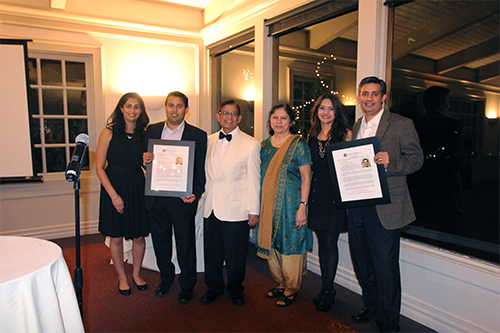
Decades of business success and philanthropic support is why the Shahs were recently inducted into the Asian Hall of Fame. The family attended an induction ceremony in Los Angeles on November 1, 2025. Moy, Striegl, and other Wells Fargo employees were in attendance.
“It was wonderful to see my parents honored that way,” said Rupesh. “They really are the most genuine people I know, and they still live like they’re the owners of a small company. They’re humble and make sure every interaction with people counts.”
“For me and my brother,” he continued, “we feel like we’re still in the early innings. We have a lot more to do and a long way to go to truly deserve an honor like this.”
MSI’s biggest advantage, though, is family.
“They’re always on the same page, and our team has always had such respect for the admiration, love, and respect the brothers have for their parents,” said Colin Craver, a Wells Fargo market executive and managing director. “You rarely see such harmony between first- and second-generation operators. They are always united with any strategic move they make.”
Up for the challenges
Rajesh has two children — a first-year college student and a junior in high school — while Rupesh’s kids are seven, nine, and 11. Suffice to say they aren’t on the verge of taking over the MSI empire. But, if they have designs on doing it one day, the brothers are going to treat their children the same way Manu and Rika treated them.
“We want them to do what they have a desire to do — deep down,” Rupesh Shah said. “It’s not fair to them to even set the smallest expectation of one day wanting to come back to the business. One of the smartest things my parents did was encourage us to work elsewhere, to get the good, bad, and ugly from the outside.”
Plus, it’s not time for the third generation to take over, because the brothers feel they have more to give. After all, for them, the unknown is just another growth opportunity.
Twenty years ago, 100% of MSI’s business was natural stone. Though the industry has grown, natural stone is not even 15% of its business today.
Spreadsheets and models predicting the future are great for any business, but there’s another ingredient that allows MSI to continue to outpace its counterparts.
“Probably where a lot of our competitors have failed is that they get too tied to the product instead of the customer,” Rupesh said. “Just because you start that way doesn’t mean you have to always be that. We have pledged to be adaptable no matter what happens. We may think we know what’s going to happen next, but the reality is we just don’t. We try to study people and follow our customers where they’re heading.”
So where will MSI be in five or 10 years?
“We have no clue,” Rupesh said. “But adaptability has been there for us from birth. Whatever comes, because of how our mom and dad raised us to look at the world, I think we’ll be up for the challenges.”