April 28, 2026

10 min read
Why it can pay to invest in resilience: 4 ways to prepare your home for natural disasters
Home improvement projects don't just help increase your property value; they can also keep you and your family safe while protecting one of your most important assets: your home. Wells Fargo supports homeowners with financing options to help them boost their home's resilience.


Key takeaways
- Why invest in disaster-preparedness? Damaging storms and natural disasters have grown increasingly common in recent years, data shows.
- Where to upgrade: Consider home efficiency or resilience upgrades across key areas of your home, including the roof; heating, ventilation, and air conditioning (HVAC) systems; battery storage systems; or windows and doors.
- Understand your climate: Invest in improvements that are best suited to your weather and storm risks.
- Unlock savings: Resilience-boosting, energy-efficient improvements to your home can help you recover better from extreme weather while reducing utility bills or insurance premiums.
How resilient is your home? Being prepared for storms, dangerous heat, and natural disasters has never been more important as extreme weather — and costly repairs — become more common.
In recent years, disasters causing more than $1 billion in damage have skyrocketed in the U.S., from just a few per year in the 1980s to nearly two dozen on average per year in the 2020s, National Centers for Environmental Information data shows.
Beyond resisting extreme weather, modern disaster-proofing upgrades can help homeowners respond to these crises and unlock measurable energy savings, according to Rulon Washington, senior manager of customer growth segments for Wells Fargo Home Lending.
“Investing in your home’s resilience is really about protecting your peace of mind,” he said. “These improvements keep your family safer, help you recover faster when storms or outages hit, and are a smart financial move as natural disasters become more common.”
“These improvements keep your family safer, help you recover faster when storms or outages hit, and are a smart financial move as natural disasters become more common.”
For example, residents in rural Georgia and Alabama saved an average of 35% on their utility bills after Groundswell, a nonprofit focused on building resilient communities, provided more than $1 million in resilience improvements like new HVAC systems and roofs to 115 homes. And when the nonprofit worked with the Wells Fargo Foundation to build a resilience hub in Georgia, the community gained a reliable and trusted place to find shelter and have a meal during severe weather.
“Resilience is how you shore up the everyday conditions that people face so that when storms do hit and outages happen, there’s a baseline set of conditions from which people are able to bounce back,” said Matthew Wesley Williams, Groundswell’s senior vice president of community development. “Resilience is about the everyday and the emergency.”
Here are a few ways to better disaster-proof your home.
4 ways to invest in your home’s resilience
Roofing
A good roof over your head is essential, yet it’s one of the most commonly damaged parts of your home. Roof damage is responsible for an estimated 70% to 90% of insured residential catastrophic losses most years, depending on specific weather events — such as hurricanes, severe wind and hail storms, or other high-wind events — according to the Insurance Institute for Business & Home Safety.
When replacing or repairing your home’s roof, resilient materials can defend against things like wind and hail damage, the most common causes behind homeowners’ insurance claims, according to Insurance Services Office data published by the Insurance Information Institute.
These upgrades include things like impact-rated asphalt shingles or metal paneling to resist hail, debris, wind, or fires during tropical storms, tornadoes, and other natural disasters.
Your roof project can even unlock significant discounts on your home insurance premiums, depending on your insurance provider and policy.
Heating and cooling
Efficient HVAC systems promote resilience by reducing energy demand, lowering energy costs, and helping to maintain comfortable indoor temperatures, even during extremely hot or cold temperatures. The core components of your HVAC system matter most: a thermostat, a furnace or heat pump, an air conditioner, and any fans, ducts, or ventilation.
Modernizing your HVAC could mean investing in a smart thermostat, a new air conditioning unit, or switching systems altogether, such as moving from a traditional furnace or baseboard heating setup to an electric heat pump, which can be especially efficient in warmer areas.
Backup batteries
For homeowners at risk of severe storms, another option for boosting resilience is creating a backup power source or battery storage. A standby generator or solar power and battery system could be a lifeline if you’re prone to losing power from storms or an unreliable electric grid.
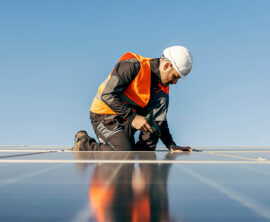
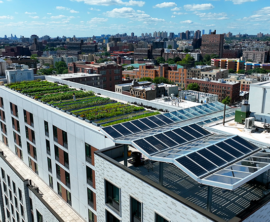
These systems work in tandem with residential solar panels, which are typically installed on your home’s roof. When these panels produce electricity you don’t need, that energy can be stored in batteries for later use, like keeping your fridge powered or heat on through an outage.
In recent years, homeowners investing in solar have increasingly added batteries to keep their homes powered. Most families in the U.S. could weather blackouts while saving 15% on their electricity costs on average by installing these systems, according to research published in Nature Energy.
Windows and doors
Windows and doors affect your home’s efficiency, resilience, and comfort. They’re critical security points, too; 36% of homeowners upgrading their windows and doors sought to feel safer and more secure, according to a Home Improvement Research Institute survey.
To boost both efficiency and resilience, consider replacing single-pane or leaky windows with impact-resistant, multi-pane varieties or adding storm doors, which both better insulate your home and protect it from the elements.
Work with your contractor or vendor to find the best options for your home and climate. For example, some windows are designed to reflect heat, keeping your home cooler. Windows with multiple glass layers create air pockets for better insulation.
How to pay for resilience-boosting home improvements
You’re not alone if you’re looking to invest in disaster-proofing or efficiency upgrades.
“As the cost of home improvements has increased, we’re seeing greater interest from consumers in financing solutions that allow them to invest in their homes while managing costs,” said Emily Chin, Wells Fargo’s head of Retail Services.
There are several ways to finance a home improvement project. Through Wells Fargo Retail Services, participating home improvement contractors can offer customers a range of financing options, including no interest if paid in full promotional plans, equal monthly payment options with promotional low APRs, and reduced‑rate financing over longer terms that may offer more affordable monthly payment options. Available options may vary based on your project needs, budget, contractor, and other factors.
Beyond financing, consider how your home improvement project could qualify for discounts, rebates, or other programs.
- Before starting work, reach out to your home insurance provider for documentation confirming what upgrades are eligible for discounts and how much they’ll reduce your insurance premiums.
- Check local rebate programs for home improvement incentives. Your city, county, or state may offer incentives like low- or no-interest loans for qualifying projects.
- Make sure you understand any requirements to qualify for these discounts or rebate programs. Using a licensed contractor is often required to get insurance premium discounts, rebates, or other incentives. Be wary of scammers posing as contractors.
Finally, consider how these investments can help you save money immediately through lower utility bills and generate value in the long term through the possible resale of your home.
For example, upgraded windows could pay for themselves over time, especially given rising electricity prices in recent years. At least a quarter of your heating and cooling energy usage comes from heat that is gained or lost through windows, according to the U.S. Department of Energy.
“We’re short on power and getting shorter by the day, while demand on the grid is skyrocketing. And as a result, that demand is driving costs,” Williams said.
Many efficiency upgrades have a track record of boosting resale value, allowing homeowners to recoup some of their investment. These projects include adding backup power generators, swapping a furnace setup for heat pumps, and replacing windows or roofs, according to The Journal of Light Construction.
Find financing for your home resilience project
Whether you need a hail-resistant roof or a new air conditioner to stay cool, Wells Fargo offers loan options for homeowners to renovate, remodel, or invest in their home.